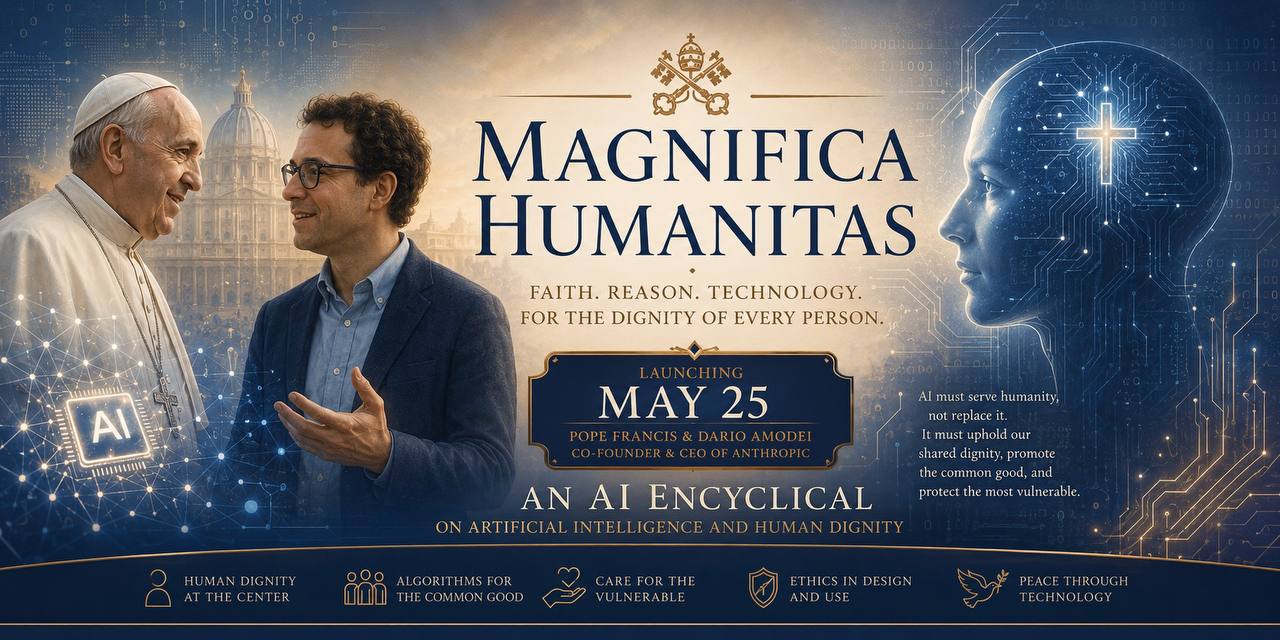
Pope Leo XIV's much-anticipated first encyclical is poised to cap a trio of papal pronouncements that grapple with what it means to be human in times of profound technological change.
On Monday, Pope Leo XIV will publish his first encyclical Magnifica Humanitas (magnificent humanity), keenly anticipated to lay out his approach to centering our humanity and ensuring the protection of persons in an age of AI. The document is being positioned as a natural successor to Pope Leo XIII's Rerum Novarum, published 135 years ago, which shaped how organizations and governments framed human dignity in the context of technological change.
There's a third encyclical that, in a sense, completes the picture — Pope Francis' 2015 Laudato Si'. Together, they address what we do, where we live, and who we are in times of technological transformation.
Pope Leo XIII's 1891 Rerum Novarum focused on capital, labor, and human dignity in the context of the industrial revolution. The insights continue to resonate as AI ushers in a new era of automation. Yet it didn't address the coupling between technology and the planet — the gap filled by Laudato Si', which appealed for "a new dialogue about how we are shaping the future of our planet."
And yet both fall short of addressing the one domain where AI is shaking things up in ways no other technology has come close to: how the technology both challenges and opens up new ways of revealing who we are. This is the gap that Magnifica Humanitas is anticipated to fill.
From "AI psychosis" to "cognitive surrender" — the growing evidence that heavy AI users trust AI to do their reasoning for them, despite it not being trustworthy — the cognitive coupling between humans and AI is reshaping who we are. The unique relationship between humans and artificial intelligence also has the potential to transform our understanding of ourselves, and to help us thrive.
In a world where AI is inevitable, how do we ensure that we develop and use these technologies in ways that center human dignity, that enable human flourishing, by taking an integrated approach to what we do, where we live, and who we are?
It remains to be seen how much Magnifica Humanitas will contribute. But all indications are that it will represent an important step toward ensuring and celebrating our "magnificent humanity" in an age of AI.